HARDWARE · 4th April 2026
Sustainable Hardware & Circular Design: Building Technology for the Future
As intelligent hardware becomes part of everyday life—from wearables and smart homes to industrial sensors—the environmental impact of these devices is coming under greater scrutiny.
Rethinking How We Build Intelligent Devices
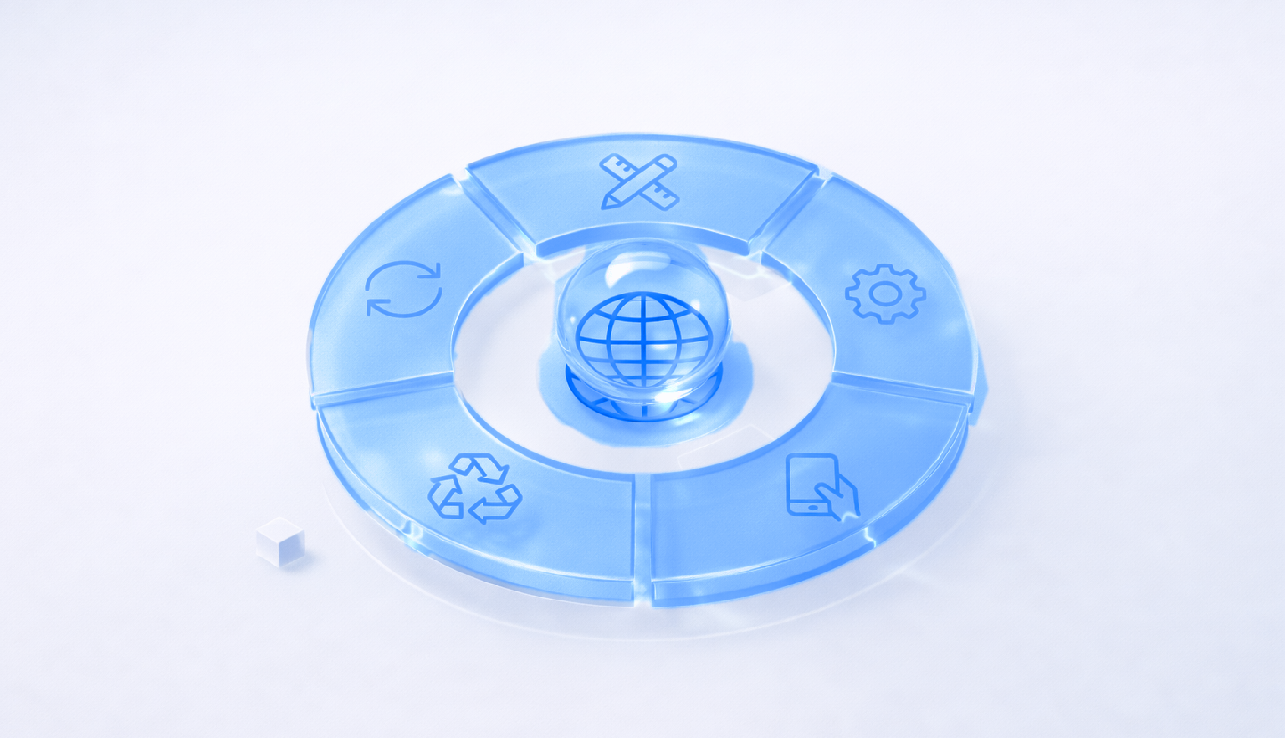
As intelligent hardware becomes part of everyday life—from wearables and smart homes to industrial sensors—the environmental impact of these devices is coming under greater scrutiny. Every product involves raw material extraction, manufacturing, shipping, usage, and eventually disposal. When multiplied across millions of devices, the ecological footprint becomes significant.
By 2026, sustainability is no longer just a corporate responsibility initiative—it has become a practical requirement for technology companies. Regulators are tightening environmental standards, and customers are paying closer attention to how products are designed and manufactured.
For hardware companies, this shift means moving away from traditional development models and embracing circular design principles that prioritize longevity, repairability, and responsible material use.
Why Circular Design Matters for Modern Hardware
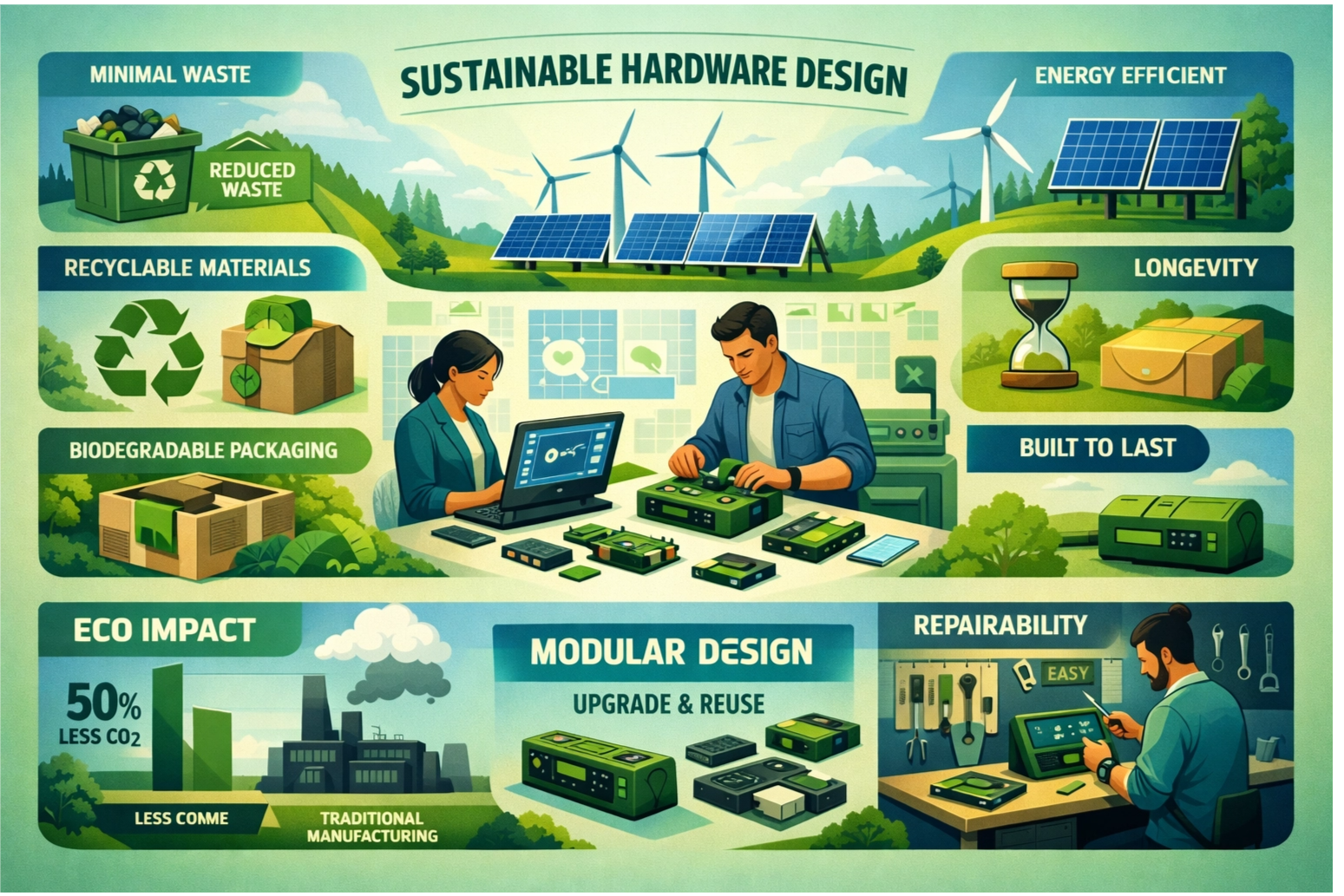
Most electronics have historically followed a linear lifecycle: resources are extracted, products are manufactured, used for a few years, and eventually discarded. While this model enabled rapid technological growth, it also created a growing environmental challenge.
Electronic waste is now one of the fastest-growing waste streams globally. Devices often contain valuable metals and complex materials that are difficult to recover once products reach the end of their life.
Circular design offers an alternative approach. Instead of assuming products will be discarded, it encourages engineers to design hardware that keeps materials in use for as long as possible. Devices are built to last longer, be repaired more easily, and eventually be disassembled so their components or materials can be reused.
For companies developing intelligent hardware, this approach is becoming increasingly important—not only to reduce environmental impact, but also to meet emerging regulations and market expectations.
The Environmental Challenges of Traditional Hardware
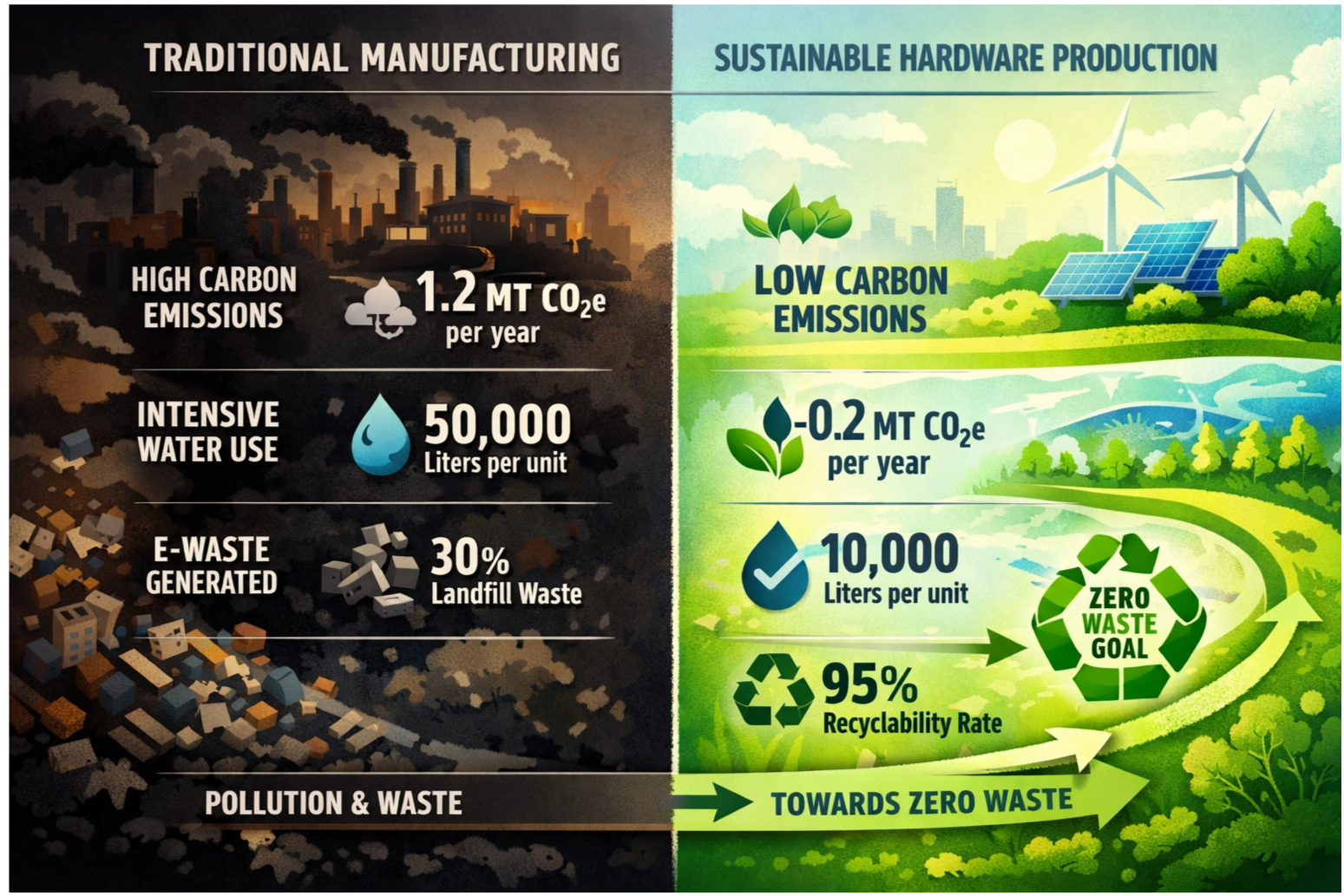
The conventional hardware production model creates several sustainability issues.
One of the biggest concerns is resource depletion. Many electronics rely on finite materials such as rare earth elements, copper, and precious metals. Extracting these resources requires significant energy and can create environmental damage.
Another challenge is the growing volume of electronic waste. Devices that cannot be easily repaired or recycled often end up in landfills, where hazardous components can harm ecosystems.
Manufacturing and global logistics also contribute to a large carbon footprint. Producing semiconductors, batteries, and electronic components requires energy-intensive processes, while international supply chains add further emissions.
As intelligent devices continue to expand across industries, these environmental costs become increasingly difficult to ignore.
Principles of Circular Design in Hardware Development
Circular design focuses on keeping products, components, and materials in circulation for as long as possible. For hardware developers, this philosophy influences several aspects of product architecture.
Designing for longevity is a foundational step. Durable components, thoughtful thermal management, and timeless product design help prevent devices from becoming obsolete too quickly.
Repairability is another critical element. When batteries, sensors, or other components can be replaced without specialized equipment, devices can remain functional for much longer.
Modular architecture also plays an important role. Products designed with interchangeable modules allow individual parts to be upgraded or replaced instead of discarding the entire device.
Material selection matters as well. Engineers increasingly look for recycled materials, responsibly sourced components, and substances that can be recovered more easily at the end of the product lifecycle.
In some cases, sustainability can also be achieved through dematerialization—finding ways to deliver functionality through software improvements rather than adding additional hardware components.
Bringing Circular Thinking into Hardware Development
Implementing circular design requires consideration throughout the entire development lifecycle.
Material choices are often evaluated early in the design process to identify options that reduce environmental impact or improve recyclability. Product architecture may be structured so that high-wear components—such as batteries or sensor modules—can be replaced independently.
Long-term software support is another important factor. Devices that continue receiving firmware and security updates remain useful for longer periods, reducing the need for premature hardware replacement.
End-of-life planning also becomes part of the design conversation. Products can be engineered to allow easier disassembly so that valuable materials can be recovered and reused rather than lost in waste streams.
Energy efficiency plays a role as well. Hardware that consumes less power throughout its lifetime contributes to a lower overall environmental footprint.
Why Sustainable Hardware Makes Business Sense
While circular design is often associated with environmental responsibility, it also offers practical advantages for technology companies.
Products designed for longevity and modular upgrades can reduce manufacturing costs over time by minimizing waste and enabling component reuse. Energy-efficient devices can also lower operating costs for customers.
Sustainability initiatives can strengthen brand reputation as well. Many customers—both individuals and enterprises—prefer technology partners that demonstrate clear environmental responsibility.
Regulatory trends are another important driver. Regions such as the European Union are introducing stricter requirements around repairability, recycling, and product lifecycle transparency. Companies that integrate sustainability early are better positioned to adapt to these policies.
Perhaps most importantly, sustainability encourages innovation. Engineers are challenged to rethink materials, product architecture, and service models in ways that can lead to entirely new approaches to hardware development.
Designing Technology with the Future in Mind
The next generation of intelligent hardware will not be judged only by performance or features. Increasingly, it will also be evaluated by how responsibly it is designed and how efficiently it uses the planet's resources.
Circular design offers a framework for building technology that balances innovation with environmental responsibility. By focusing on durability, repairability, and material recovery, hardware companies can extend the life of their products while reducing waste.
As the technology industry continues to grow, integrating sustainability into hardware development will play a crucial role in shaping a more responsible and resilient future.
KEEP READING

HARDWARE
The Future of Intelligent Hardware Development: A 2026 Roadmap
The year 2026 marks a pivotal shift in the landscape of technology: the era of truly Intelligent Hardware.

HARDWARE
Industrial & Packaging Design: Why the First Impression Matters
Smart design drives trust, sales, and loyalty—starting with the very first glance.Industrial and packaging design shape how customers feel before they ever use your product.

HARDWARE
Custom PCB Design services: What Startups should know before manufacturing
A step-by-step guide for startups to turn circuit ideas into tested prototypes — faster, cheaper, and ready for scale with confidence.
NEWSLETTER
We write when we’ve actually built something.