
AI · 6th November 2026
Kiosk, Screen or Hologram: Choosing the Right Form for a Public AI Interface
Most conversations about a conversational AI installation start with the form. Someone has seen a figure standing in a glass case at an event, and the brief arrives already decided: we want the hologram.
The form is usually the last thing that should be decided, and it is almost always decided first. This article works through the options honestly, including where the impressive one is the wrong choice.
What people mean by hologram
The word covers three different things, and vendors are not always careful about which one they are selling.
- A true hologram, recorded as an interference pattern, exists in laboratories and in your passport. Real-time holographic video of a talking person is not a product you can buy today, whatever a sales deck implies.
- Pepper’s ghost, a nineteenth-century stage technique in which a bright image is reflected off an angled transparent surface so it appears to float in the space behind. This is what large-scale stage holograms are, including the famous concert ones.
- Transparent-display units, where a transparent LCD or OLED panel is lit from within a box so the subject appears to stand inside it. Most commercial hologram boxes sold today are this.
None of these is dishonest in itself, and each produces a genuinely striking effect. But they behave completely differently in a building, which is where the decision actually gets made.
The four forms, and what each one asks of you
A flat screen or standard kiosk
Unglamorous and frequently correct. A screen works in bright light, is readable from almost any angle, supports captions and touch easily, and costs a fraction of the alternatives to buy and maintain. If the job is answering questions, giving directions or handling a check-in, this does it.
The trade-off is presence. A screen does not pull someone across a foyer. Where footfall past the unit is already high, that matters less than people expect.
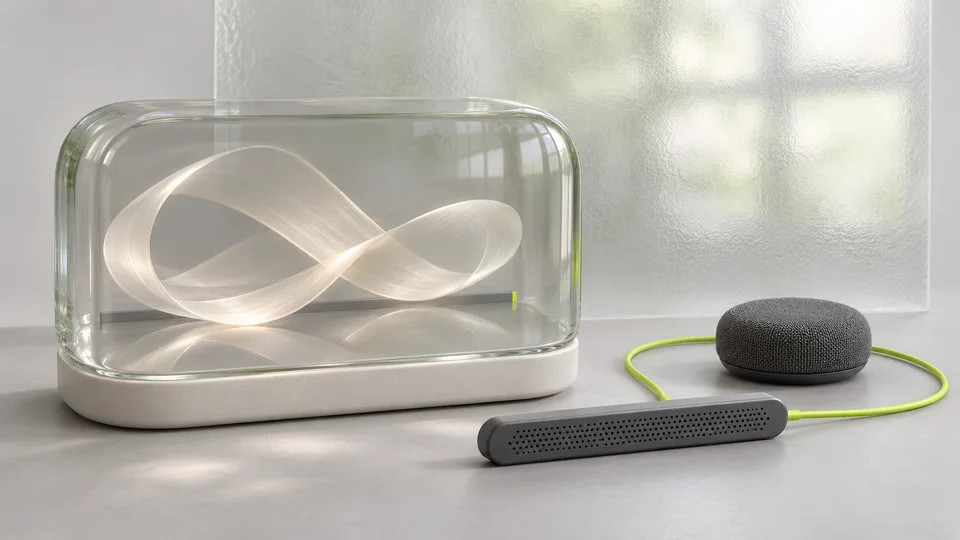
- Display and background
- Check contrast with the actual light and surroundings behind the unit.
- Microphones
- Test the visitor’s voice against the noise at the counter.
- Audio
- Make the reply clear for the person standing in front of the unit.
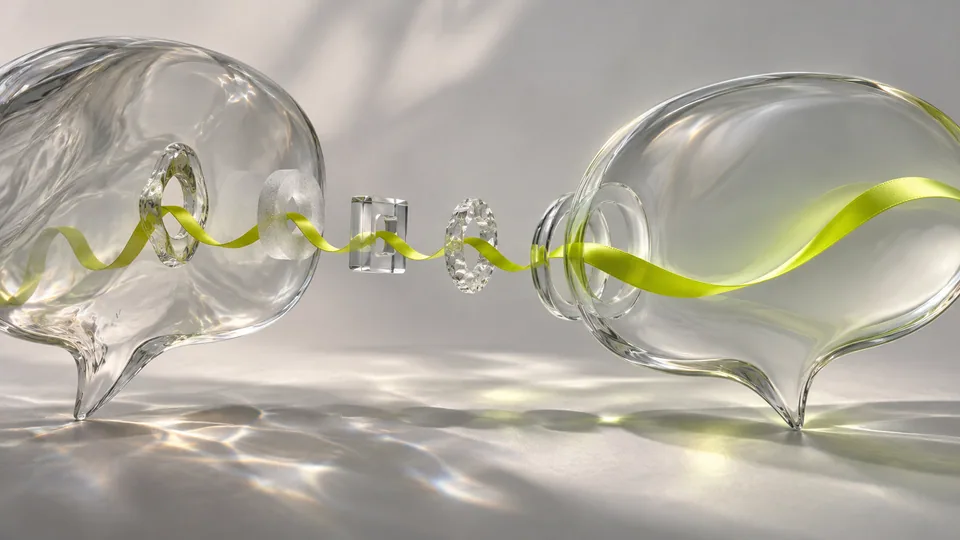
Concept artwork, not a photograph or specification of HoloBot. The optical loop is a visual metaphor.
A transparent-display counter unit
A person-sized or desk-sized box with a transparent panel, so the figure appears to stand inside it. These suit a reception desk, a showroom or a retail counter, where someone is already approaching and the unit needs to feel like a presence rather than a sign.
Two things to check before buying. Transparent panels typically pass only part of the light through, so what sits behind the unit matters: a bright window behind it will wash the figure out. And resolution is generally lower than an equivalent solid display, so detailed text on the panel reads poorly. Design for a face and a few large words, not a menu.
A full-height Pepper’s ghost installation
The most impressive and the most demanding. Done well it is the only form where a life-sized figure genuinely appears to share the room, and it draws a crowd from across a hall.
What it asks for in return: control of the lighting, because the effect depends on contrast and ambient light degrades it; control of the viewing angle, since the illusion works within a cone rather than from anywhere in the room; depth behind the glass, which means floor space you may not have; and careful attention to what is visible behind the installation.
That said, the common claim that Pepper’s ghost is fragile and event-only is overstated. A properly built installation is robust, needs little maintenance and can run continuously. The question is whether your space can give it the conditions it needs, not whether it can last.
LED fan displays
The spinning-blade units that appear to hang an image in mid-air. Striking in a dark space, cheap relative to the alternatives, and almost always the wrong choice for a conversational interface: they work best in darkness, suit simple shapes and short text, and are not a medium for dialogue. Useful as attention-getters near an installation, not as the installation.
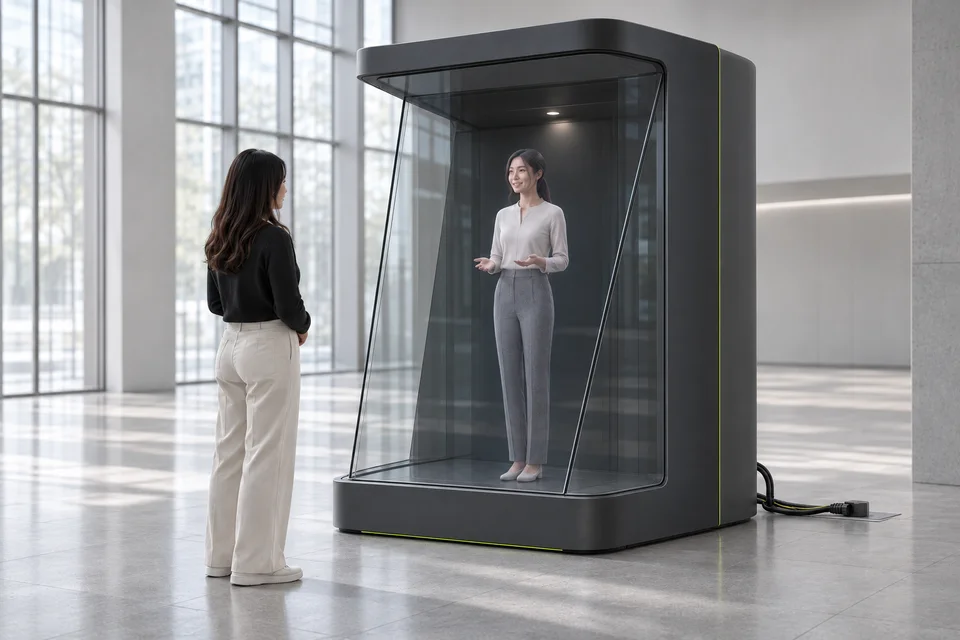
- Standing position
- Check that a visitor can see the avatar and use the interface comfortably.
- Light and sightlines
- Test the proposed display at the actual venue and brightest time of day.
- Installation and support
- Plan safe cable routes, access for maintenance and a fallback if the connection fails.
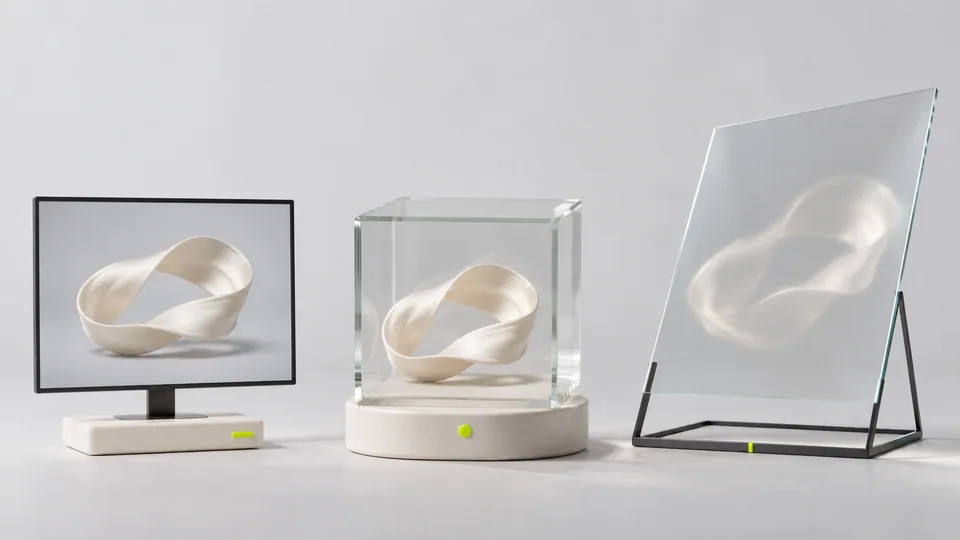
Illustrative concept scene, not a photograph of an Avantari installation.
Six questions that decide the form
- How bright is the space, and can you change it? This single question eliminates more options than any other. An atrium with glass walls rules out most floating-image techniques; a controlled exhibition room permits all of them.
- Where will people stand? A reception desk is a one-to-one encounter at a fixed position. A concourse has people approaching from every direction. The first suits a counter unit or Pepper’s ghost; the second needs a form readable across a wide arc.
- Is the conversation the point, or the attraction? If people need to read a timetable, a list or a form, they need a readable screen. If the goal is to stop someone walking past, presence matters more than legibility.
- How long must it run? A three-day exhibition and a permanent installation in a hospital have different answers. Serviceability, spare parts and who resets it on a Sunday morning belong in the decision.
- What is the whole-life cost? Purchase is one number. Installation, content production, calibration, AI and speech running costs, monitoring and maintenance are the rest, and for the more elaborate forms they are the larger half.
- What does the space allow physically? Floor area, ceiling height, depth behind the unit, power, network and a route to get the thing through the door on installation day.
What does not change with the form
Whichever shape you choose, the things that decide whether people actually use it are the same, and they are mostly invisible in a photograph.
- A microphone array that can isolate one speaker in a noisy room, and directional audio so the answer reaches that person.
- A response fast enough to feel like conversation, which is an architecture decision rather than a model decision.
- Content bounded to approved material, with an honest answer at the edge of what it knows.
- Clear disclosure that the visitor is speaking with AI, in the greeting and on screen.
- Captions, a touch alternative and a defined behaviour when the network drops.
We covered these in more depth in the eight decisions to make before commissioning an avatar, and the permission and disclosure side in a separate piece on digital personas.
Three common mistakes
- Choosing the form before the job. The brief that starts "we want a hologram" rather than "we want visitors to stop asking staff the same four questions" usually ends with an expensive object nobody has a use for by month three.
- Putting a floating-image technique in a bright space. It will look superb in the vendor’s demonstration room and disappointing in your atrium, and no amount of tuning recovers the contrast.
- Buying a one-off event rig for a permanent position. Stage installations are built to be assembled, used and struck. A reception desk needs something designed to run unattended for years.
A practical way to decide
Write down the job in one sentence, then visit the exact spot at the busiest hour and at the brightest hour. Take a photograph from where visitors will approach. Measure the floor area and the light. Then ask vendors what they would put there, and listen for the ones who ask about the room before they describe their product.
It is also reasonable to start with a screen. A screen with excellent conversation is a better installation than a hologram with a poor one, and it leaves you free to upgrade the form once you know what people actually ask.
How Avantari approaches it
We build the conversational system first and fit the form to the job. HoloBot runs on screen, as a compact counter unit and at full height, with the same conversational AI behind each, so the choice of form is a question about your space rather than a different product. Because we also do the embedded hardware, the microphone array, on-device computing and enclosure are designed together rather than assembled from parts chosen separately.
Frequently asked questions
Is a hologram box a real hologram?
Not in the strict scientific sense. Most commercial hologram boxes use a transparent display panel lit from inside, and large stage holograms use the Pepper’s ghost reflection technique. Both produce a convincing floating figure; neither is an interference-pattern hologram, and real-time holographic video of a person is not commercially available today.
Will a holographic display work in a bright space?
Poorly, in most cases. Floating-image techniques depend on contrast, and ambient light reduces it. Transparent panels also let background light through, so a window behind the unit washes out the figure. In a bright atrium a conventional screen will usually look better and cost less.
Which form is cheapest?
A standard screen or kiosk, by a wide margin, both to buy and to run. Beyond purchase, compare installation, content production and calibration, AI and speech running costs, monitoring and maintenance, since on the more elaborate forms those together usually exceed the hardware.
Can a Pepper’s ghost installation run permanently?
Yes. A properly engineered installation is robust, needs little maintenance and can run continuously. The real constraint is the room: it needs controlled lighting, a defined viewing position and depth behind the glass.
Are LED fan displays worth considering?
For attracting attention in a dark space, sometimes. For a conversational interface, no. They suit simple shapes and short text in low light, and they are not a medium for dialogue or for reading.
Can we start with a screen and upgrade later?
Yes, and it is often the sensible route. If the conversational system and content are built independently of the form, the first installation can be a screen while you learn what visitors actually ask, with a more elaborate form added where it earns its place.
Send us a photograph of the spot
The most useful thing you can send us is not a brief but a picture: the exact place the installation would stand, taken from where visitors will approach, at the brightest time of day. We will tell you which form fits and which we would rule out. Talk to Avantari.