HARDWARE / HIPPOS
Hippos
An active knee-protection system engineered to disappear inside a legging.
Avantari engineered Hippos: a body-worn system combining movement sensing, mechanical actuation and an airbag inside a single wearable device. The challenge was fitting that mechanism inside a legging — so we solved deployment first, then designed the device around it.

Client
Hippos Exoskeleton
Year
2025
Discipline
Hardware
Deployment time
5 months
Services
Product design, Mechanical, Deployment
The brief
Build a wearable system around real-time movement sensing.
Hippos combines movement sensing, mechanical actuation and an airbag into a single body-worn system, engineered to fit inside a legging.
The constraint
The first system was too big.
They were considering large custom helium canisters, but wearables need a much smaller architecture that could work with standard cartridges and still deploy extremely fast.
WHY THE AIRBAG
Deployment is measured in milliseconds.
Hippos continuously monitors knee movement. When the system detects a dangerous inflection pattern, it is
designed to trigger the airbag around the joint. The sense-to-deploy sequence had to complete in milliseconds,
not seconds — that speed requirement shaped every part of the mechanism.
SENSE → DETECT → DEPLOY
Real-time movement sensing triggers the airbag mechanism.
Engineering before design
Protection only works if it gets there first.
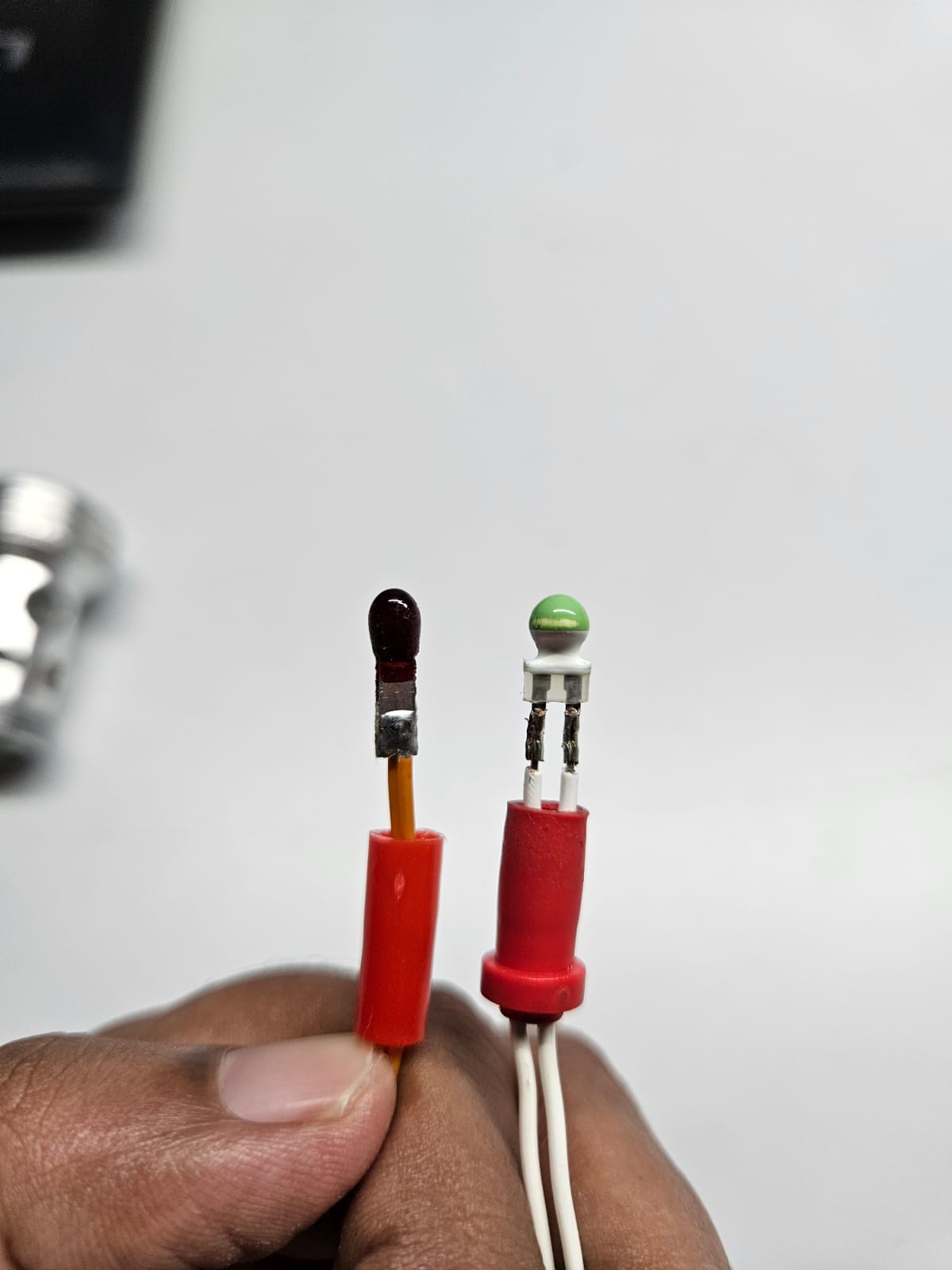
Pyro deployment architecture
We designed the actuation and puncture path so the system could trigger quickly, repeatably and in a package small enough to wear.
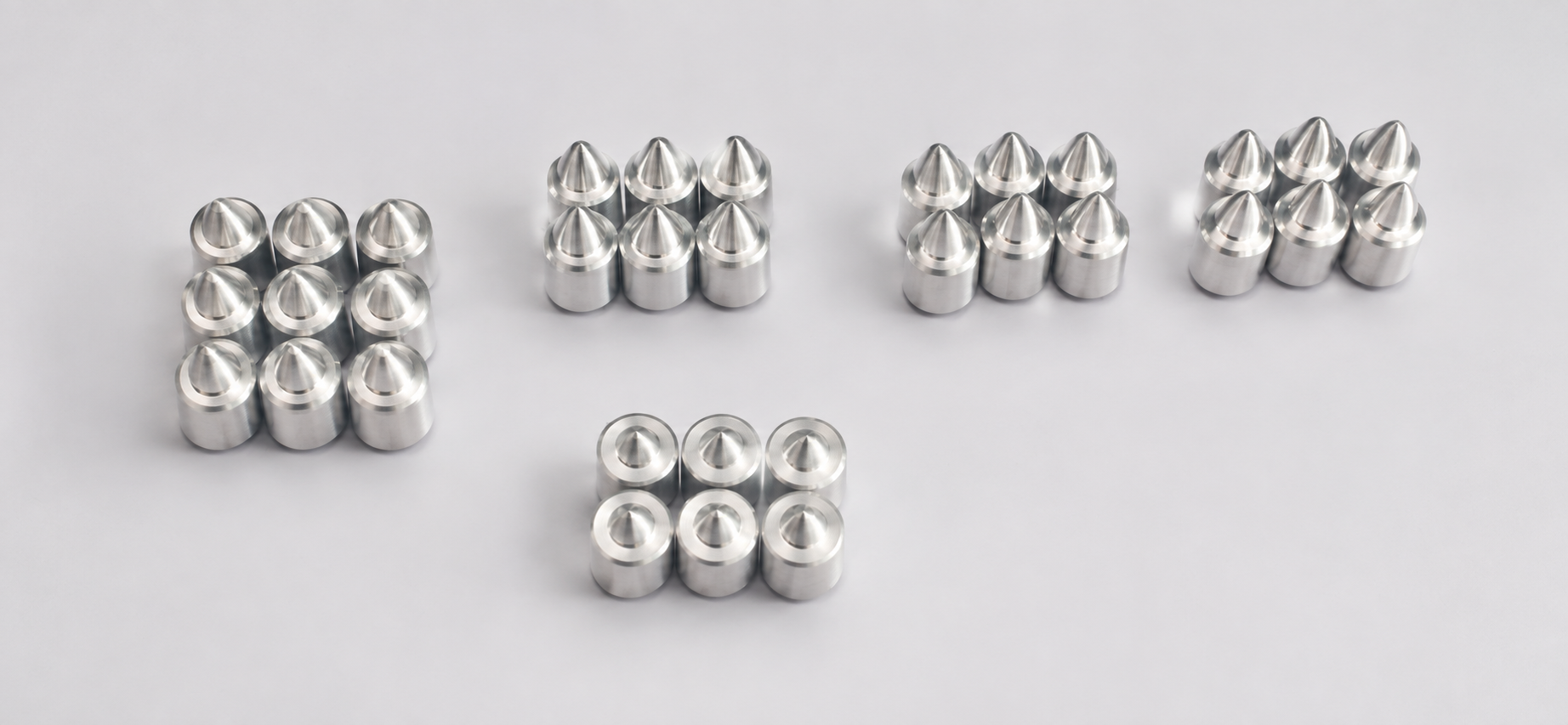
Bullet geometry iterations
We tested different puncture profiles against standard CO₂ canisters, iterating the bullet shape until the protection system could deploy in 33 ms.
Design around the mechanism
Once the deployment stack was locked, we designed the complete product — compact, beautiful and made to live inside the legging.
How we achieved 33 ms
Bullet geometry iterations
Pyro iterations
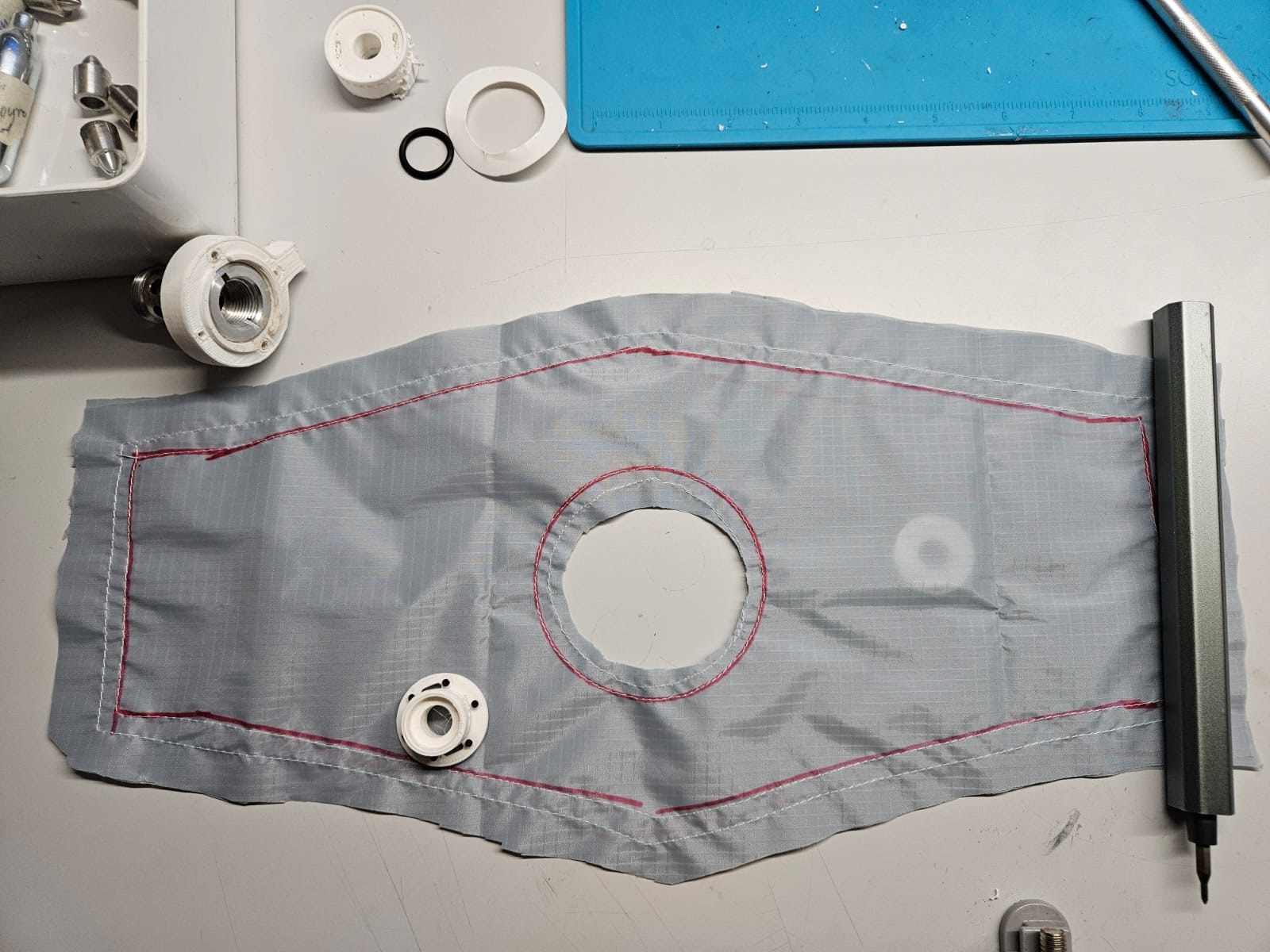
Custom airbag
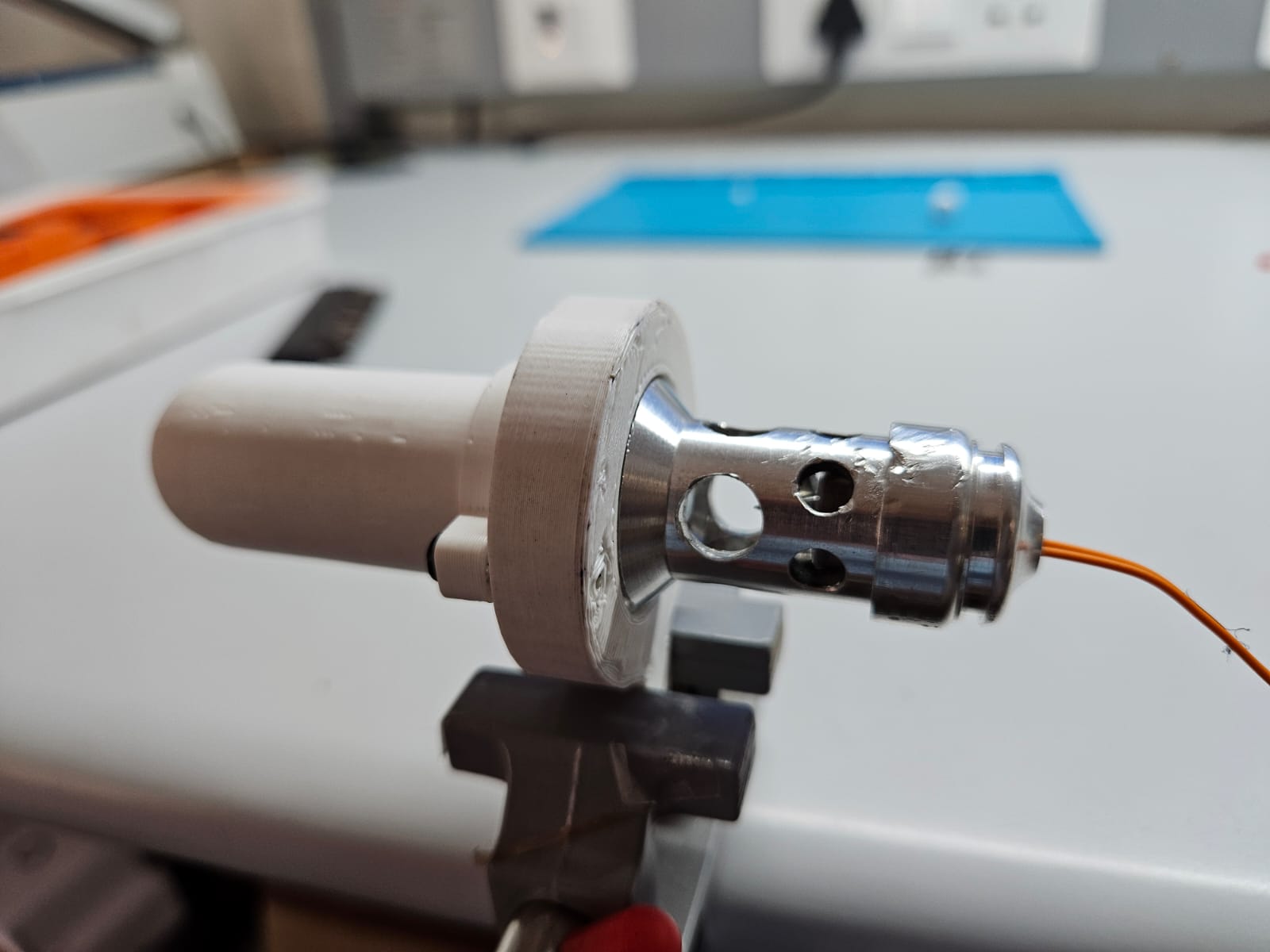
Deployment rig
Trial 1
0 ms
Before there was a wearable, there was a deployment problem. We proved the mechanism first.
THE CONSTRUCTION
Make an airbag disappear into leggings.
We iterated the enclosure around movement, garment integration and the geometry of the leg. Every millimetre mattered: the device had to protect the mechanism while becoming visually and physically quiet inside the leggings.
WORN, NOT CARRIED
The enclosure was shaped around the body and the garment, not around a bench-top assembly.


THE FORM
Packing a complex mechanism into something beautiful.
The 33 ms deployment work gave us a proven mechanism. We then packaged the standard CO₂ cartridge, pyro actuator, puncture path and air path into a miniaturised architecture that could sit against the leg rather than beside it.
STANDARD CO₂
No bulky custom helium canister — a compact architecture around an off-the-shelf cartridge.
THE PRODUCT
The mechanism became a product.
Once the internals were locked, we resolved the final housing, interfaces and finish as one object — a compact deployment module that looked intentional enough to belong in a performance garment.
2-MONTH BUILD
From a validated deployment system to the finished wearable device.


WHAT HAPPENED
33 ms. Inside a legging. In 5 months.
33 ms
Measured deployment after pyro and puncture-geometry iteration.
Standard CO₂
Moved away from large custom helium canisters to a compact architecture around standard cartridges.
5 Months
From concept to a finished, wearable device.
Client words
Kylin Shaw
Founder & CEO, Hippos
“Avantari took a deployment concept, engineered it around standard CO₂, iterated the puncture mechanism until we reached 33 ms, and then turned that engineering into a product we were proud to own. They operated like an extension of our founding team—fast, rigorous and deeply invested in getting it right.”
PREVIOUS
← EVOLVE OR FOSSILISEINDEX
ALL WORKNext
DARWINBOT →